It often starts with an aspirational wish list and wide-eyed optimism. Visions of hosting family and friends in your new (exquisitely detailed, beautifully furnished) home are frequently conjured in the process of residential design.
For most clients, undertaking the often years-long, expensive, and maddeningly complex process of having anything enduring built requires a certain level of insanity from all parties.
It also demands excitement, enthusiasm and genuine buy-in to get you through a process that can last longer than some marriages. It’s an arduous hike up what feels like a financial Mt Everest — to Base Camp (aka: appointing a builder), to the eventual Summit (aka: practical completion), before the descent (we call this the defect rectification period). Until you’re safely ensconced in a goose-down-feather-filled lounge chair, sipping something strong and relaxing from an artisanal hand-blown glass vessel beside an open fire (when every last tradesperson finally leaves your home forever).
But before we do that, we must Design.
To do that, we must repeatedly seduce and excite our clients with visuals, reference imagery, materials and finishes they can touch and fawn over — and failing that, the odd meeting with wine and comfort food. There’s a fair bit of courtship before you get to commitment.
Commissioning a home asks a great deal of a client.
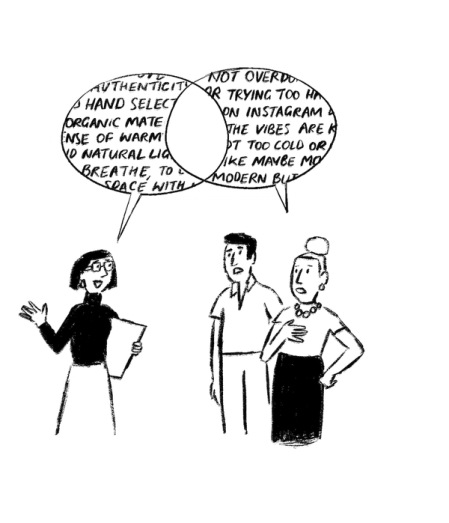
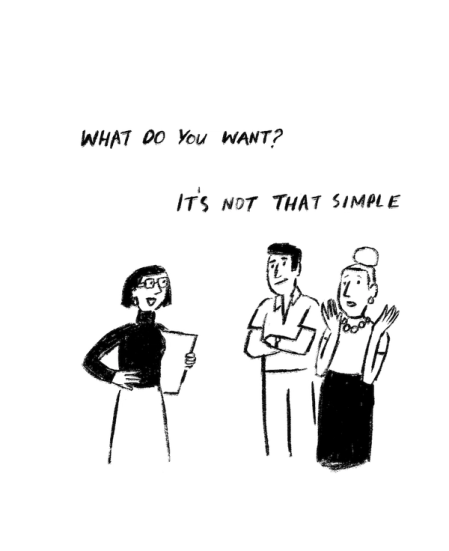
It demands handing an almost inconceivable amount of trust to a group of consultants you’ve (likely) only recently met but are trusting with your most significant possession. You simultaneously give them collectively vast sums of money so they can rodeo their way through interpreting your brief — translating phrases like timeless and classic, and reconciling the whiplash of contradictory asks along the way.
One week it’s “we also want it to feel fun — what about a jazz club for 60 in the basement?” The next it’s “we have a really fixed budget, but can we add another 500sqm?” Followed swiftly by “we really can’t budge on that $60K fridge” and “can we squeeze in a roof terrace — surely we don’t need approval for that?!”.
All of it needs reconciling into something that meets your expectations of quality and finish at precisely the same coordinates as your expectations of time and cost.

Having been my own client, I understand the madness — both perceived and felt — and the full range of emotions experienced, punctuated by factors entirely our of your control, and a deep simmering frustration at how not all conceivable possibilities were considered and communicated at the outset.
Sadly, this is not a day at the spa. You will hear “no” and “can’t be done” more that you’d like, to which you’ll produce an exasperated whisper of “why the hell not?” or “how hard can it actually be?!” It can feel demoralising when you’re outlaying large sums. But budget anxiety doesn’t shrink just because the numbers get bigger — every client, regardless of scale, weighs up value propositions from time to time.
The workaround?
The best starting point is to enter a project expecting things to shift and move. Rigidity is not your friend, agility is.
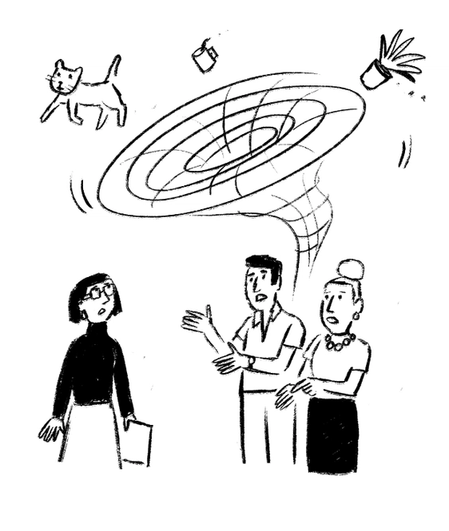
Construction is a set of problems to be solved, one after the other after the other (and so on and on). The undertaking is an inherently unpredictable, non-linear, uncertain conditions, kinks in supply chains, exchange rates, wars, financial markets, and people who let people down — all forces beyond anyone’s control that end up strong-arming the decisions. And to be fair to the architects, builders and consultants in the room: none of us are immune to it either. We’re all navigating the same unpredictability alongside you, just from a different seat at the table.
Listen out for the warnings — words like “typically” and phrases like “in our previous experience” punctuate conversations around budgeting and program. Because the truth of it is, experience will only take you so far. Every site, existing building, set of regulations, governing authority, head contractor, subcontractor and consultant is different. A bit like children — you know what they look like, but not how they’ll behave on a long car trip when blood sugar dips.
Like it or not, buildings are dreamed up, documented, approved, assessed and built by humans, and things are all but guaranteed to go ‘off-piste’ from time to time.
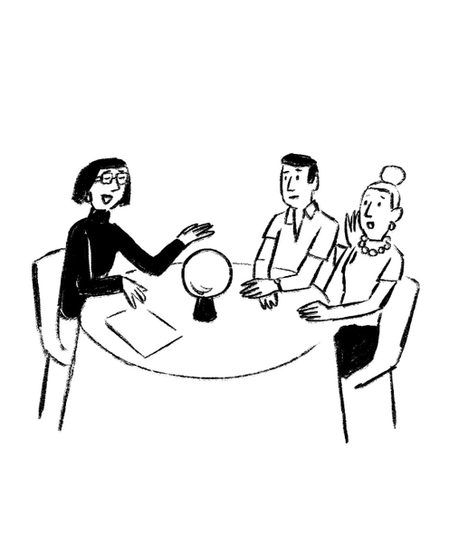
Over the years we’ve gathered several irrefutable truths worth committing to memory:
Things will take longer than you think
You will change your mind (multiple times)
You can’t know everything at the outset (a bit like parenthood in that sense)
Things rarely go precisely to plan
Is it worth it?
When a project is successful, it can single-handedly have the most significant impact on how you and your family live — so we certainly think so.
You just have to be a bit mad to do it.